
Miami Weather, Temperature and Rainfall


If you are planning a Miami or South Florida trip in 2026, the key weather reality is simple: it is warm to hot all year, but the experience changes a lot between the drier winter season and the much wetter, more humid summer and early autumn period.
This page has been refreshed against current NOAA 1991-2020 climate normals for Miami International Airport, so the temperature and rainfall guidance below is based on the latest official long-term averages rather than old one-year snapshots.
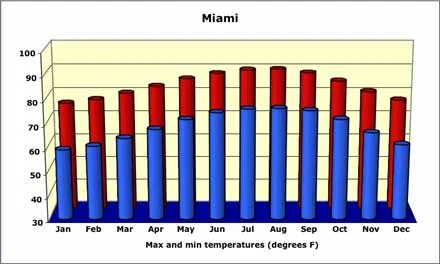
What Miami weather is usually like
- Winter: one of the easiest times to visit, with average highs around 76°F in January and 78°F in February.
- Spring: warmer and sunnier, with average highs climbing from 80°F in March to 87°F in May.
- Summer: very hot, humid and sticky, with average highs around 89 to 91°F from June to September.
- Autumn: still hot through October, then noticeably more comfortable by November.
NOAA normals put Miami’s annual average temperature at about 77°F. That makes the city feel reliably beach-friendly for much of the year, but it also means visitors should take heat, humidity and sun exposure seriously in the warmer months.
Rainfall and humidity are a big part of the story
Miami is not just warm; it has a very clear wet season. NOAA normals show rainfall jumping from 5.34 inches in May to 9.67 inches in June, staying high in August at 8.88 inches and peaking at about 9.86 inches in September.
That is why summer planning in Miami is really about heat plus storm timing. Morning beach or sightseeing plans can work well, but afternoons are much more likely to feel steamy and to bring heavy showers or thunderstorms.
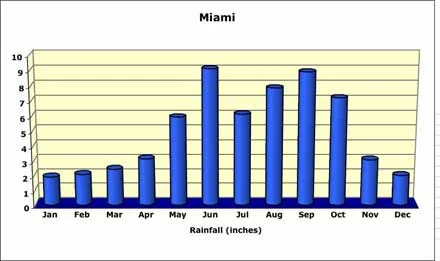
The drier stretch is usually winter into early spring. January averages about 1.62 inches of rain and February about 2.25 inches, which is a big reason many visitors find that period easier for walking-heavy city breaks.
Best time to visit Miami
For many travellers, December through April is the easiest all-round answer because it usually combines warmth with lower humidity and fewer heavy-rain disruptions. If your priority is maximum beach heat and you can tolerate a wetter, stickier pattern, summer still works, but it is less comfortable for long outdoor sightseeing days.
Storm-season planning matters
South Florida travellers should treat late summer and early autumn seriously from a weather-planning point of view. The main issue is not that every trip will be hit by a storm, but that tropical systems can disrupt flights, cruises, beaches and road plans even without a direct landfall. Read our Florida hurricane guide if you are booking that part of the year.
What this means for your trip
- For a more comfortable city-and-beach mix, favour winter or spring.
- For summer trips, plan around midday heat and expect some storm disruption flexibility.
- Use this page alongside our broader guides to Florida seasons and Florida temperature and rainfall.
- If you are deciding where to base yourself, also read our South Florida guide.